Wearable device identifies specific food scents with 73 percent accuracy
Ohio State researchers developed a prototype that uses machine learning to classify odors in real time, aiming to create personalized digital smell interfaces.
By John Price ·
Researchers at The Ohio State University have created a wearable device that identifies specific food odors with roughly 73 percent accuracy. The system, named Scentronic, combines an artificial intelligence e-nose with a release mechanism designed to deliver scents to a user in real time. This development represents a shift in human-to-machine interfaces, which have traditionally focused on touch, sound, and vision while overlooking the sense of smell.
The prototype was trained on five distinct food scents: coffee, beer, red wine, orange, and chocolate cake. During field testing, participants were able to identify individual odors about 73 percent of the time and paired scents about 71 percent of the time. Jinghua Li, an assistant professor of materials science and engineering at Ohio State and the senior author of the study, noted that the system functions as a framework for accurate, hands-free olfactory stimulation. She stated that the work combines hardware and software innovations to address societal challenges.
Li explained that the long-term goal is to incorporate these systems into compact and personalized devices. The team found that individual sensitivity to odorants varies, with some participants detecting different intensities for the same scent despite the odors being easy to distinguish. The study also demonstrated that the device works effectively alongside interfaces that generate taste, suggesting a path toward engaging multisensory experiences. Li described the system as programmable and cost-effective.
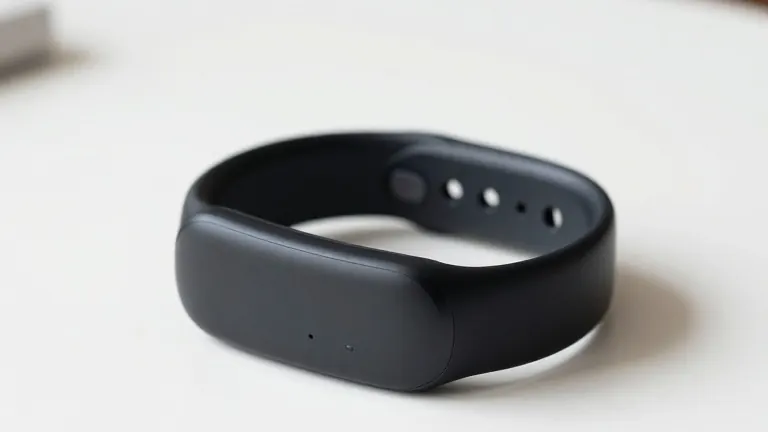
The research team designed multiple versions of the hardware to serve potential consumers. One version is a wristband that users can lift to their nose to detect a scent. Another is a necklace where five odor channels align like pearls on a string, opening only after receiving a specific signal. Li said the flexibility of the design allows the sensors to be adapted for extended reality experiences that go beyond sight and sound.
The study was published in Science Advances. Li highlighted the medical applications of the technology, noting that the loss of olfaction is linked to many neurological diseases and infections. She said it is important to create technologies that decode the secrets of the olfactory system and then reconstruct them based on that information. The device could serve as a sensory aid in medical contexts to reduce the need for frequent clinic visits and improve patient comfort.
Next steps for the project involve testing other ways to integrate the devices into daily accessories. The team plans to explore wearable electronics such as watches and smart jewelry. Li said the initial demonstrations are promising and that digitized smells may arrive sooner than expected. She added that there are many potential opportunities for these technologies to shine in various fields.
The study was supported by the National Science Foundation, the Center for Brain Injury Recovery and Discovery Pilot Award at Ohio State, and the Ohio State Alumni Grant for Graduate Research and Scholarship. Other co-authors from Ohio State include Chunyu Yang, Qi Wang, Antonia Akoto-Yeboah, Shaoru Cheng, Billings Amoah, Yizhen Jia, Shulin Chen, Akhil Canumalla, Kai Zhao, and Christopher Simons. Chen Wang from Zhejiang Laboratory in China also contributed to the work.
Source: Ohio State News