DOJ Sues Alaska to Stop Senate Certification If Incumbent Falls
Federal officials launch legal and operational plays to contest midterms, from polling place checks to mail-in ballot rejections, as Election Day nears.
By Claire Herrera ·
The Justice Department filed a lawsuit against the state of Alaska on Thursday to block the certification of the state's Senate race. The suit targets the election of incumbent Republican Sen. Dan S. Sullivan. If he loses to Democrat Mary Peltola, the federal government argues the state failed to protect election integrity by allowing independent candidate Dan J. Sullivan on the ballot. The legal move comes eleven days before polls close.
David Becker, executive director of the Center for Election Innovation and Research, called the intervention unusual. He stated that the Justice Department's action runs against standard policy and suggests political interference. Becker noted he could not recall an administration attempting to halt certification this close to the vote.
The Alaska suit is part of a wider set of federal actions. In recent days, officials have threatened California election administrators with jail time. They also implied that the Minnesota Senate race outcome would be suspect if the Republican did not win. These moves have prompted election officials in dozens of states to prepare for federal interference on Tuesday and in the weeks that follow.
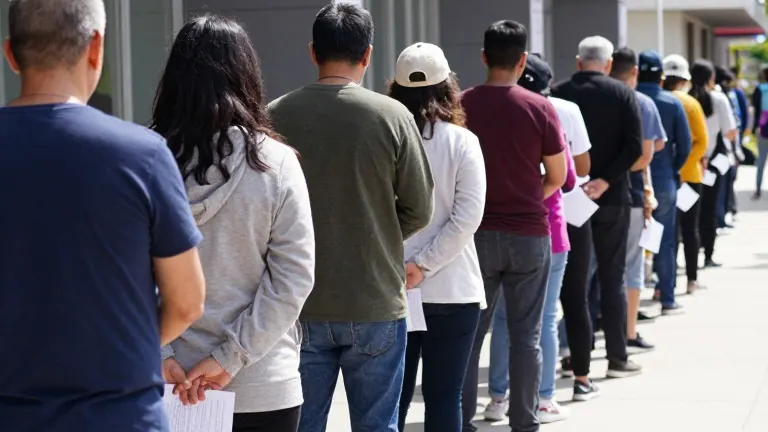
Concerns extend to the physical polling places. At least three lawsuits seek to block Immigration and Customs Enforcement agents from deploying to voting sites. One filing notes that a Colorado county sheriff's office already conducted warrant checks at polling locations this year. Virginia's Arlington County filed its own preemptive legal action. The county said it prepared plans for arrests and civil actions, a scenario it had never previously needed to address.
Federal leaders have offered mixed signals regarding military presence. Gen. Dan Caine told a Democratic senator in late August that the military had no plan to deploy to polling locations. President Trump, however, told Time in September that he did not rule out declaring a federal emergency or sending agents to the polls. The administration has also maintained a legal fight with dozens of states over allegations of noncitizens on voter rolls.
Legal experts are preparing for potential seizures of election materials. Norm Eisen, executive director of Democracy Defenders Action, said local officials must be ready to appear in court within minutes if federal agents try to take ballots or machines. This follows the January FBI raid on the Fulton County election office in Georgia. A federal judge allowed the government to retain those ballots in May, though the FBI has not announced wrongdoing.
Rick Hasen, a law professor at UCLA, published a white paper suggesting judges order copies of seized ballots. This would allow certification to proceed while authorities investigate. Meanwhile, the Department of Justice asked Washington state on Monday not to count ballots from more than 400 voters suspected of being noncitizens. This request comes as over one million ballots have already been cast in that state.
State-level rules are also affecting ballot counting. In North Carolina, the State Board of Elections implemented a rule requiring voters to use three separate envelopes for ballots and ID copies. Failing to seal any envelope results in rejection. The state's ballot rejection rate has risen to 3.1% from 2.6% in the previous cycle. This increase aligns with a broader effort to tighten verification standards ahead of the vote.
Election officials view certification as a mandatory duty. If local officials delay or refuse to certify results, state courts can compel the process. Officials can also pursue criminal or civil penalties. The 2020 election saw President Trump pressure Georgia Secretary of State Brad Raffensperger to find 11,780 votes to overturn Joe Biden's win. Trump allies also pressured lawmakers in Michigan, Pennsylvania, and Arizona.
With less than a week until voters cast ballots, the legal and logistical preparation continues. Teams of lawyers from voting rights groups are coordinating with state and local officials. They aim to respond to any federal moves that could disrupt the counting of mail-in ballots or the final tabulation of results in key states.
Source: Time