India’s Youth Rejects Cockroach Label After Election Roll Purge
A student-led movement has forced the resignation of the education minister and is now challenging the legal basis of removing 130 million voters from official records.
By Claire Herrera ·
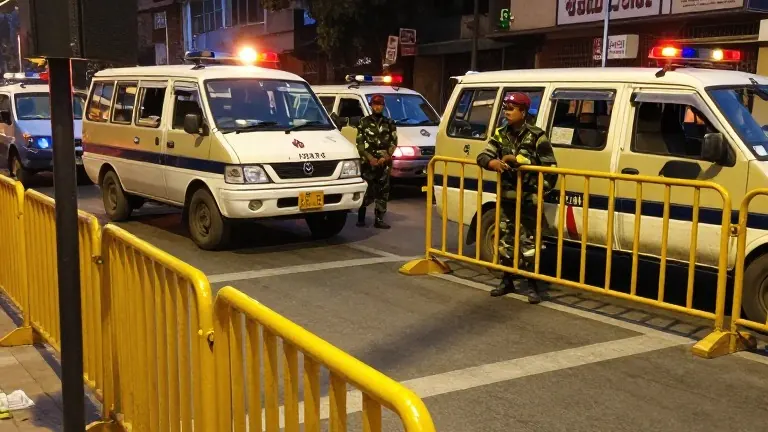
A loudspeaker on a spiked pole in Delhi announced that groups of four or more people were illegal. The voice repeated the message on a loop near Connaught Place, a central district in the Indian capital. It urged the public to leave in peace.
Student activists had staged a hunger strike at the nearby Jantar Mantar observatory earlier this summer. They protested corruption in the education system, specifically targeting Dharmendra Pradhan, the education minister in Prime Minister Narendra Modi’s cabinet. In May, the National Testing Agency announced it would scrap medical entrance exams after investigating leaked papers. At least twenty-one students died by suicide following the news.
The protests led to Pradhan’s resignation in the summer. They also ignited a wider movement led by young people. India has 370 million residents between the ages of fifteen and twenty-nine. This mobilization created a visible challenge to the authority of the Bharatiya Janata Party, the ruling Hindu-nationalist party. In mid-October, authorities de-notified Jantar Mantar as a protest site, removing it as a venue for public assembly.
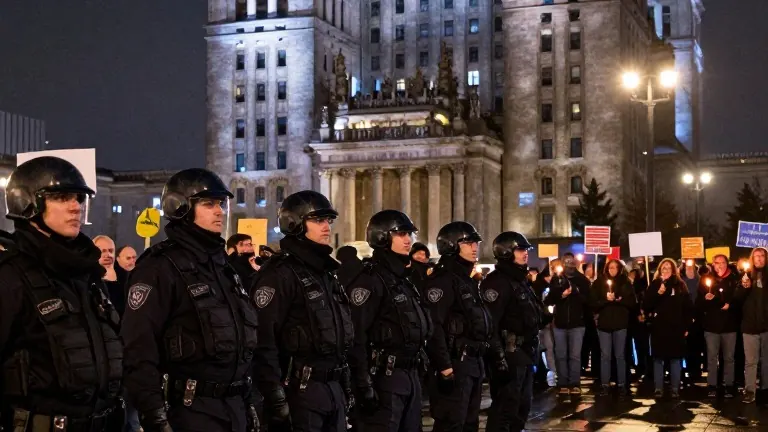
Security forces maintained a heavy presence around the area. Central Reserve Police Force soldiers in camouflage uniforms sat in parked buses or loitered outside. Delhi Police constables in khaki uniforms stood at street corners with idling vehicles. Yellow metal barricades lined the traffic crossings. Crowds were sparse compared to the usual busy shopping season leading up to the Diwali festival in early November.
Anjali, a member of the All India Students’ Association in her mid-twenties, described the treatment of protesters away from media cameras. She said police and paramilitary forces beat, slapped, and kicked students who were cooperating with detention. She recounted an incident where a male police officer yanked up her shirt while pushing her into a detention bus. She stated that the regime felt humans should be humiliated, but the experience left her enraged rather than defeated. She noted that people were no longer scared and asked what they had to lose.
The movement gained national attention after the chief justice referred to unemployed youth as cockroaches. Abhijeet Dipke, a recent graduate from Boston University, responded on social media by asking what would happen if all cockroaches came together. He launched the Cockroach Janta Party online. The group quickly grew into a major opposition force with millions of followers. Its first major victory was the resignation of Pradhan.
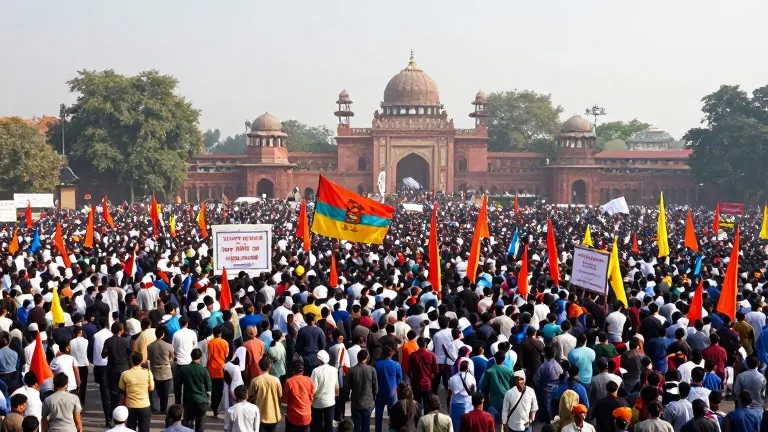
The party’s focus then shifted to the election commission. The government undertook a revision of voting lists to remove duplicate, deceased, or undocumented individuals. The process resulted in the deletion of more than 130 million names from the electoral rolls. Protesters argued the results were dubious and inconsistent. Current protests in Delhi are concentrated on this constitutional issue. In early October, opposition parties joined tens of thousands of protesters in a march to the Supreme Court.
By the final day of the Dussehra festival on October 20, activist momentum had slowed. Two top spokespeople for the Cockroach Janta Party were sentenced to five days in judicial custody after breaching barriers at Jantar Mantar. Dipke had been released after signing a peace bond. At a fairground in the northwest Delhi locality of Pitampura, a large crowd gathered to watch the Ramleela performance and the burning of effigies.
B.J.P. politician Kapil Mishra, a cabinet minister in the Delhi government, lit a thirty-foot-tall effigy of a cockroach. He described the insect as an alliance of filth, Naxalites, jihadis, and the corrupt. The effigy went up in flames before the traditional burning of Ravana, the demon king from the Ramayana epic. The event added to the air pollution in the city. A B.J.P. legislator asked the audience to chant Jai Shri Ram, the party’s battle cry.
Student protesters in Delhi maintained that their issues were national and specific rather than part of a global uprising. They cited the corrupt national exams and the removal of voters from rolls as the primary drivers of their actions. The movement continued to operate despite the removal of official protest sites and the detention of key leaders.
Source: The New Yorker