Moldy Corn Sells for $18 a Pound in St. Louis
Chefs and farmers turn a common crop disease into a high-end ingredient as warmer weather fuels its spread.
By John Price ·
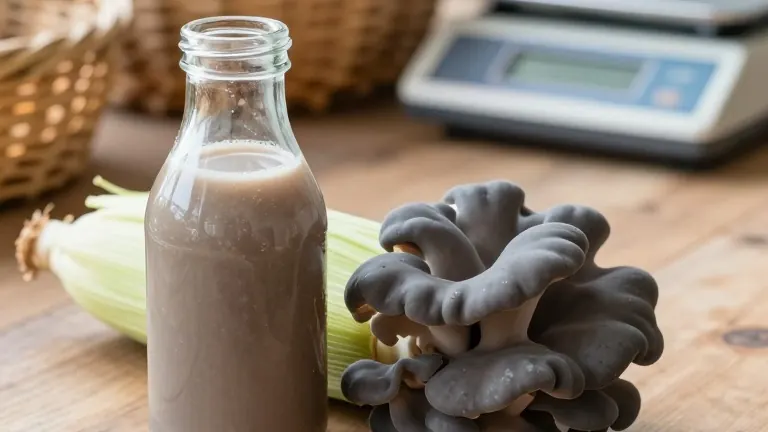
A vegetable broker drove an empty U-Haul for hours through southeast Missouri to an Old Order Mennonite community near Fredericktown. He sought a specific agricultural defect: infected corn ears known as huitlacoche. This blue-tinged growth, once discarded as a crop failure, now commands premium prices in local markets.
Ephraim Brubaker, manager of the Home Gardens Community Market in Farmington, noted the shift in perception among the 25 local families. "Growing up I didn't know it's something to eat," Brubaker said. "We kind of avoided it and thought it's a bad thing in the field. Now we're selling it for $10 dollars a pound."
The fungus creates tumor-like galls on the corn, a process driven by specific weather patterns. Dilip Shah, a scientist at the Donald Danforth Plant Science Center, explained that extreme heat followed by heavy rain weakens the plant's immune system. "It’s basically uncontrolled growth of corn tissue," Shah said. "The fungus can exploit the weak immune system of the plant to cause a disease."
Trent Front, an Illinois state climatologist, confirmed that growing season temperatures and humidity in the region are rising. These conditions are becoming more conducive to fungal growth. "Over the next 20 or 30 years, we will likely have more years that are warmer, more humid, more conducive for fungal growth than years that aren't," Front said.
Local retailers are adapting to the demand. Becca Widzer, manager at Local Harvest in St. Louis, stocked the item for the first time this year. She priced the product at $18.49 per pound, making it one of the store's most expensive produce items. Widzer placed the galls near the fresh corn on the shelf, though she acknowledged the visual similarity to mushrooms.
Chef Adrian Maldonado of Malo, a Mexican restaurant in St. Louis, sources the ingredient from the anonymous broker. He serves a huitlacoche butter as the first course of an eight-course tasting menu. Maldonado said he sees the product as a way to challenge casual stereotypes about Mexican cuisine. "There is a huge belief that Mexican food should be cheaper, it should be more casual, approachable, just kind of throw stuff on a plate," Maldonado said. "We don't believe that whatsoever."
William Esslinger, owner of Confluence Kombucha, also uses the fungus in his beverages. He slices the galls and adds them to chanterelle-based kombucha. Esslinger views the ingredient as a way to preserve food history that was previously lost to fields. "People have been eating this stuff forever and ever and ever," Esslinger said. "It's a fun thing that just gets thrown away."
Source: WOI
More Business · Unethical Practices · Report a business · Got a Story?