Research Links 10% More Driving to 10% More Fatal Crashes
New analysis suggests that reducing vehicle miles traveled is a more effective strategy for saving lives than targeting specific driver behaviors like drunk driving.
By John Price ·
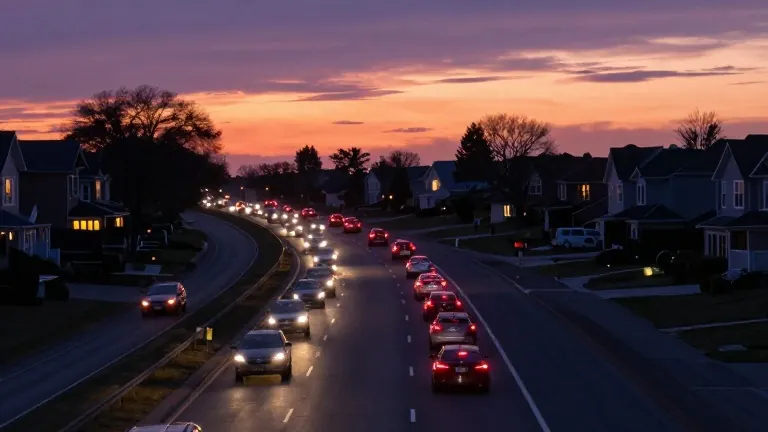
Drivers who cover more miles are statistically more likely to be involved in a fatal crash, according to new research published this week. The study indicates a direct correlation between the amount of driving a population does and the number of traffic deaths, a relationship that transportation officials have historically downplayed.
The findings challenge the standard approach used by highway departments and the federal Department of Transportation. These agencies often focus on outlier behaviors, such as drunk driving or speeding, when designing safety campaigns. The new data suggests that the sheer volume of cars on the road is a primary driver of fatalities, independent of how individual drivers behave.
Researchers note that officials prefer to target specific bad habits because it is easier to communicate a message about 'bad drivers' than to tell the public they should drive less. Acknowledging that more cars lead to more deaths requires a shift in policy toward reducing vehicle miles traveled, a concept that is often met with resistance.
The study relies on per capita data to isolate the effect of driving volume. When researchers control for other variables, the link between total miles driven and crash rates remains strong. This implies that infrastructure and policy choices that encourage driving, such as sprawling suburban design, directly impact public safety outcomes.
In Chicago, transit agency NITA is currently expanding its authority to develop land around station areas. The agency recently gained the power to buy property, offer financing, and issue debt for development projects. This new capacity is intended to support transit-oriented development, which can help reduce the need for private vehicle use in those specific zones.
However, NITA is expected to start with land it already owns while it builds staff capacity. This cautious approach reflects a common trend in public transit agencies that lack the immediate resources to execute large-scale development projects. The new powers represent a potential tool for reducing car dependency in the long term, but the execution will be gradual.
Meanwhile, ride-hailing services are showing measurable effects on travel patterns in the Chicago area. A study using travel survey data from 2008 and 2018 found that trip distances to non-work destinations fell by two miles after ride-hailing became widespread. The same cohort showed a reduction in car ownership, suggesting that shared mobility options can displace private vehicle trips.
These changes in trip length and destination have implications for land use planning. If fewer people drive long distances to work or for leisure, cities may need to adjust their zoning and infrastructure investments. The data supports the idea that shifting how people move can alter the physical layout of urban areas.
On the state level, Ohio Senator Bernie Moreno has proposed a bill to tax data centers 100% of the subsidies they receive from state and local tax breaks. The proposal aims to end the practice of offering massive incentives to high-tech firms. Critics argue that such subsidies often benefit corporations more than local residents, a point echoed by economist Timothy J. Bartik.
Bartik, a senior economist at the Upjohn Institute, noted that offering economic development incentives while making it impossible to build housing creates a contradictory policy stance. He described this combination as 'somewhat schizophrenic.' The debate over subsidies highlights a tension in how governments balance business attraction with local community needs.
Source: Urban Milwaukee