Supreme Court: High Court rejects Trump bid to segregate California ballots
Justices denied the administration's emergency request to hold thousands of mail-in votes, citing a timeline that left little room for judicial intervention before the midterms.
By Julian Khan ·
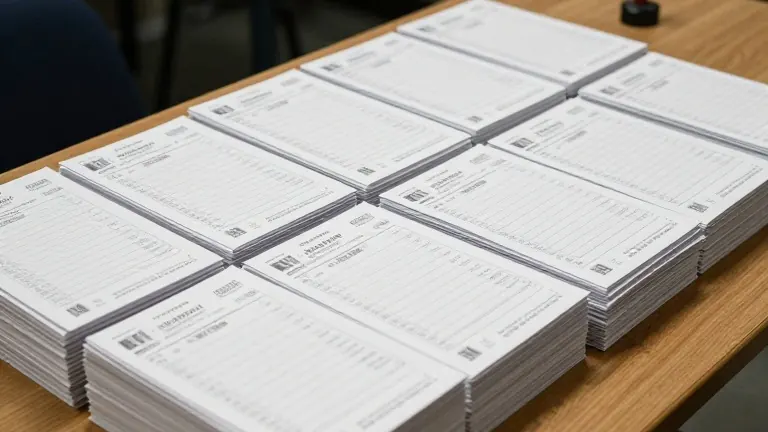
The Supreme Court on Monday denied President Donald Trump’s emergency request to force California to separate mail-in ballots that the Justice Department claims may have been cast by noncitizens. The high court issued a one-sentence order rejecting the administration’s appeal, a decision that arrived hours after the request was filed and just before the midterm election.
The rapid ruling marked the latest in a series of losses for the Trump administration in election-related litigation. In September, the justices had already rejected a plan to alter how mail ballots are distributed nationwide. That proposal drew warnings from election officials who feared it would disrupt the midterms. The current case involves a smaller, more specific remedy that Solicitor General D. John Sauer described as modest.
Sauer told the court that the United States identified more than 20,000 individuals in California who appear to be registered to vote based on publicly available information. The administration argued these individuals are likely not U.S. citizens. The Justice Department contended that the federal government has a constitutional interest in ensuring only citizens vote. It also claimed California’s failure to investigate the flagged voters hinders the enforcement of federal criminal laws banning noncitizen voting.
The appeal reached the Supreme Court on an unusually tight timeline. Tens of millions of voters had already cast early ballots nationwide. The court did not explain its reasoning or note any dissents. The justices also did not request a response brief from California or other parties before ruling, a departure from their usual practice in high-profile cases.
Lower courts had previously ruled against the administration. On Friday, the 9th U.S. Circuit Court of Appeals barred the government from intervening in California’s mail-in ballot counting. The appeals court concluded the federal government lacks the power to dictate how states run elections. A 2-1 panel, including Judges Mark Bennett and Gabriel Sanchez, wrote that if the United States believes different procedures are necessary, it should take that suggestion to Congress rather than the courts.
The 9th Circuit noted that the district court found the risks of noncitizens voting to be uncertain at best. The court also cited California’s established voter-eligibility procedures as a mitigating factor. In contrast, the appeals court found a material risk that granting the administration’s relief would result in the disenfranchisement of eligible voters.
Uzoma Nkwonta of the Elias Law Group, which represented groups opposing the suit, stated that every court to hear the case has rejected the Department of Justice’s attempt to cast suspicion on eligible voters’ ballots. Jon Miller, chief program officer at Public Rights Project, added that the federal government continues to press the same arguments despite repeatedly coming up short. He noted the case has moved between appellate and district courts, with judges consistently finding the Justice Department was not entitled to the requested relief.
Judge Patrick Bumatay, a Trump nominee, dissented in the 9th Circuit decision. He argued the administration was only asking to halt the mixing of ballots cast by citizens and alleged noncitizens. Bumatay noted that once ballots are processed, it becomes impossible to separate them. He wrote that federal courts have historically acted to protect voting rights by enjoining state action that violates the law. He added that common sense suggests the federal government should not sit idle while a state allows a violation of federal law.
The appeals court also raised the Purcell principle, a legal theory that warns against federal courts changing election rules at the last minute. This factor could be decisive for the Supreme Court’s future handling of similar cases. The administration’s mixed record in emergency election appeals includes a recent victory where the court allowed the Department of Homeland Security to continue providing citizenship data to state election officials.
Source: CBS 58