Texas Republicans vow to ban Sharia law as Muslim voters rally for November 3
State officials are expanding anti-Islamic policies and legal actions against civil rights groups, prompting local organizers to intensify voter registration drives in the final week before the midterms.
By Julian Khan ·
Texas Republican leaders are moving to codify opposition to Islamic law in state policy, a shift that has intensified tensions for Muslim communities ahead of the November 3 midterm elections. The state party platform now explicitly targets Sharia practices, a move that community leaders say goes beyond traditional state rights arguments to question the civic standing of Muslim residents.
The Republican Party of Texas adopted a platform in June titled Don't Sharia my Texas. The document calls for criminal punishment, disqualification from public and military service, denaturalization, and deportation for proponents of Islamic law. This follows a statement by Governor Greg Abbott at the Republican Midterm Convention in Dallas last month, where he declared that the state would fully ban Sharia Law in Texas without waiting for action from Washington, D.C.
Legislative activity has mirrored the party platform. In March, state legislators formed the Sharia-free Texas Caucus, which has grown to 38 members in the 150-seat chamber. This state-level effort parallels the federal Sharia-Free America Caucus, launched in Congress by Representatives Chip Roy and Keith Self, which now counts 68 members. Senator Ted Cruz joined Abbott at the convention, stating that Sharia law is fundamentally inconsistent with the Constitution.
The political stance has led to concrete legal conflicts. Attorney General Ken Paxton, who is running for the U.S. Senate against Democrat James Talarico, has sued the Council on American Islamic Relations (CAIR) to force the organization to stop operating in Texas. Abbott has separately sought to designate CAIR Texas as a foreign terrorist organization. CAIR Texas has countered by suing Abbott on constitutional grounds related to freedom of speech and expression.
Monitor groups argue that the state is expanding the definition of the threat. The Bridge Initiative, an Islamophobia tracker based at Georgetown University, released a report in February noting that politicians point to ordinary expressions of Muslim civic life as evidence of encroachment. The report identified public participation, demographic growth, and involvement in community development as factors used to frame Muslim engagement as a broader threat. Rights advocates note that no Texas jurisdiction has enacted Islamic law, yet officials are investigating unique cases such as a Muslim-centred housing development in North Texas and voluntary Islamic arbitration groups.
For residents, the rhetoric has personal consequences. Mariam Ahmed, a 42-year-old physician in Houston, said she contemplated leaving the United States within the last two years due to the climate. She cited a fear of her child being viewed as a terrorist. Samir Nadjam, a 45-year-old lawyer, noted that children in schools are picking up on the political tension, leading to off-putting interactions among peers.
Organizers are working to convert this frustration into votes. The Islamic Society of Greater Houston, which oversees more than 30 mosques, expanded voter registration drives this year. Leaders urged members to vote their conscience rather than follow specific endorsements. Sania Rahim of the Coalition for Peace, Relief, and Equity pointed to the diversity of the Muslim population in Texas, noting that no single ethnicity dominates and that outreach requires multilingual efforts.
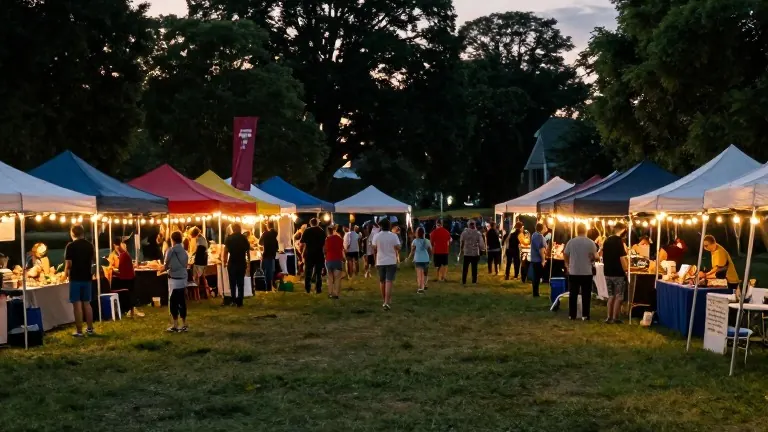
The Texas Board of Education recently approved a high school curriculum that critics say focuses disproportionately on radical Islam and misportrays the prophet Muhammad. This issue has served as a specific rallying point for local campaigns. Sameeha Rizvi, a civic engagement organiser for CAIR, held a table at a recent Fall Fest event in Houston. She urged attendees to register and vote, stating that the community must speak out in the court of public opinion rather than maintaining a silent model immigrant stance.
Muslims account for less than two percent of the Texas population. Despite this small share, organizers believe a major increase in turnout could influence local races. A Republican delegate who attended the state convention described the treatment of Muslim members as very hurtful. He said he would remain involved in local Republican politics but would skip voting for some candidates who embraced the anti-Sharia rhetoric.
Source: Al Jazeera