Chicago Real Estate: Turning Empty Offices Into Vertical Farms
A startup is leasing vacant downtown space to grow leafy greens, claiming the system uses less water than a standard office floor.
By John Price ·
Downtown office districts in major U.S. cities remain quiet even after the pandemic restrictions ended. In Chicago, an entrepreneur is using that empty space to grow food.
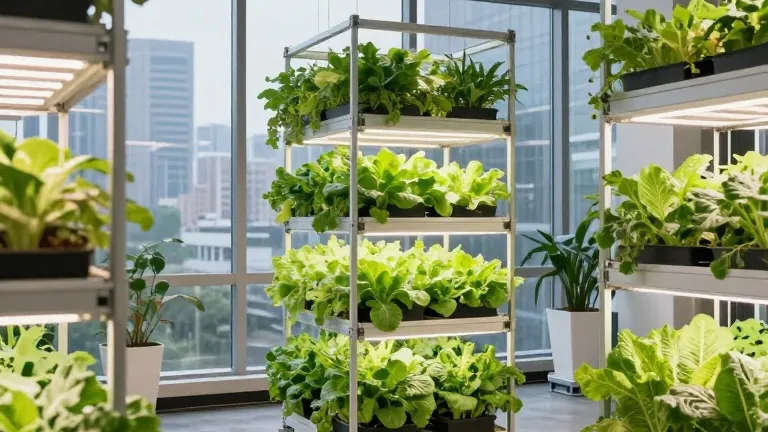
Russell Steinberg is the founder and CEO of FARMZER0. His company leases vacant office floors to install vertical farming systems. These systems grow edible greens that are then delivered to local buyers. Steinberg identifies three specific problems his business aims to solve: office vacancy, public health concerns, and food system challenges.
The scale of empty office space in Chicago is substantial. Steinberg states there are approximately 45 million square feet of vacant space in the city. He calculates that converting just 2 million square feet of that total area would be enough to provide adequate vegetables for every resident in Chicago.
The vacancy rates in the downtown business district remain high. Post-pandemic recovery has left the area with a vacancy rate between 25% and 30%. Much of this unused space is in older buildings. These older structures are harder to repurpose because of their infrastructure. Newer commercial buildings are also part of the vacancy, but their modern systems make them easier to adapt for farming.
A typical FARMZER0 installation occupies about 650 square feet of office space. The system requires a continuous water supply to keep the plants hydrated. However, Steinberg notes that the water usage is lower than what a fully functioning office would consume. The operation is quiet, with the main sound coming from water running and the occasional use of scissors during harvesting.
The greens produced in these high-rise farms are sold to commercial clients. Blue Plate Chicago, a catering service, uses FARMZER0 produce in its menu. Chef Matthew Wilde describes the partnership as a benefit for both parties. He notes that the company utilizes space that would otherwise sit empty. Wilde adds that the product is a clean, farm-to-table green grown in an urban setting, which aligns with his business goal of supporting local sources.
Academic researchers are also examining the potential of this model. Dr. Kimberly Gray is a professor of civil and environmental engineering at Northwestern University. She has studied how cities can reinvent their infrastructure. Gray considers vertical farming a viable and climate-friendly option for metropolitan areas. She argues that growing produce in cities can reduce the costs associated with the final mile of delivery, which is often a source of pollution in urban environments.
Steinberg reports that he has received inquiries from other cities interested in replicating the high-rise farming concept. He is currently working with city officials in Los Angeles. The goal is to develop a similar project in time for the 2028 Olympic Games.
Source: WVXU
More Business · Unethical Practices · Report a business · Got a Story?