First pope votes in US midterms
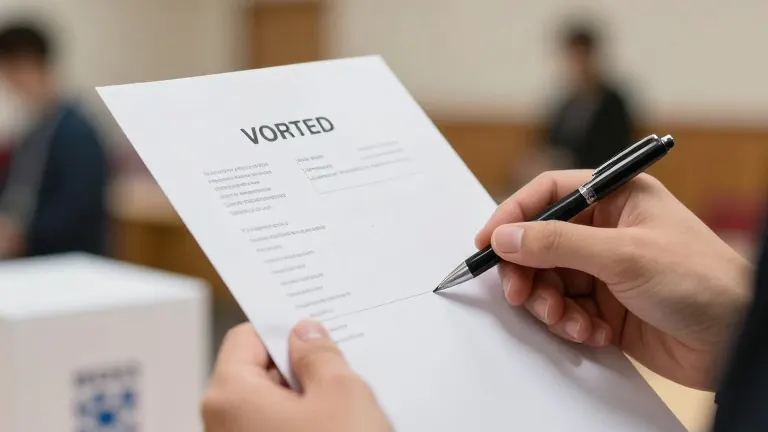
Pope Leo XIV submitted a mail-in ballot from New Lenox, Illinois, becoming the first pontiff to cast a vote in an American election.
By Julian Khan ·
Pope Leo XIV has cast the first vote by a sitting pope in a United States election. The Vatican confirmed Friday that the Chicago-born leader sent a mail-in ballot before the November midterm elections. He remains a US citizen and is registered to vote in New Lenox, Illinois.
The Holy See press office stated that Leo, formerly Robert Prevost, has exercised his right to vote as a US citizen whenever eligible. The statement noted he also voted while living in Peru. Officials said the pope believes citizens have a duty to participate in democratic processes.
Records from the Will County clerk’s office show the pope requested his mail-in ballot on October 3. It is unclear how he returned the completed ballot. His brother, John Prevost, was in Rome this week with parishioners from St. Jude’s in New Lenox. Leo attends Mass at that Augustinian-run parish and gave a talk there in 2024 while still a cardinal.
Illinois State Board of Elections data reveals a consistent voting pattern for the pope since 2000. He has voted in five primary elections. He requested Democratic ballots twice and Republican ballots three times. The records do not identify the specific candidates he supported. Illinois law requires voters to declare a party preference to receive a primary ballot.
The shift in party preference aligns with his residential moves. Prevost lived in heavily Democratic Cook County when he requested Democratic primary ballots in 2008 and 2010. He moved to the more conservative suburban Will County before requesting Republican primary ballots in 2012, 2014, and 2016.
The election records show he submitted ballots in every general election since 2000, with two exceptions. He did not vote in the 2020 or 2022 general elections. The next step in the US electoral calendar is the November 3 general election, where voters will choose nominees for various federal and state offices.
Source: Pioneer Press