First Ski Descent of Everest's North Face Completed After Partner's Death
Jim Morrison finished the historic run on Oct. 15, 2025, four hours after reaching the summit with Jimmy Chin and a team of 12.
By John Price ·
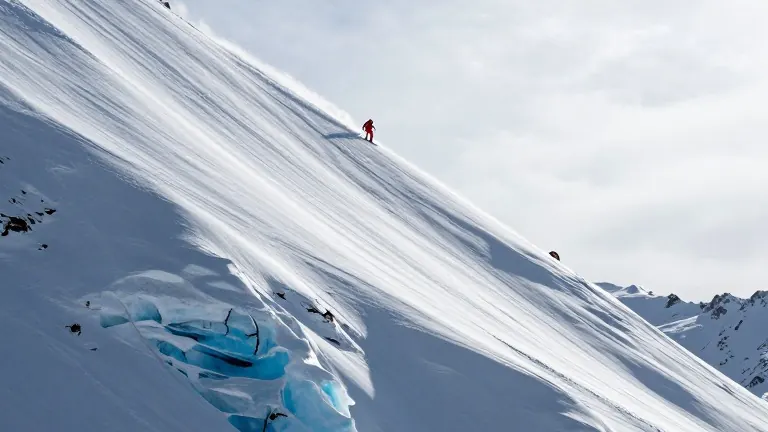
Fewer than 7,500 people have ever reached the 29,031-foot summit of Mount Everest, typically via the southern route. On the north side, a 9,000-foot face of steep ice and rock had resisted a ski descent until Oct. 15, 2025. Jim Morrison, an American ski mountaineer, became the first person to ski down that face.
Morrison reached the peak at 2 p.m. local time. He spent 45 minutes at the top, spreading the ashes of his late partner, Hilaree Nelson. After adjusting his gear, a process that took longer than usual at that altitude, he began his descent. The run lasted four hours and five minutes. It was the longest and most technical ski descent in the history of the sport.
The 2025 expedition involved 14 climbers in total. Alongside Morrison, the team included Jimmy Chin, Carla Perez, Esteban Mena Yanez, Pasang Sona Sherpa, Pemba Sherpa, Roberto Morales, Erich Reopke, Nigma Tenjing Sherpa, Pemba Gelje Sherpa, Pur Bahadur Gurung, and Tenging Gyaljen Sherpa. The group spent seven weeks on the mountain. They established three camps and an advanced basecamp at 18,100 feet. The climbers performed multiple rotations to acclimatize and move equipment to higher altitudes.
Morrison and Nelson had planned the project together. They met in 2015 on Makalu and started dating in 2017. Their goal was to climb the direct north face and ski down. That plan ended in Sept. 2022 when an avalanche on Mount Manaslu killed Nelson. Morrison had previously lost his wife and two children in a 2011 plane crash. Chin, a close friend and experienced climber, joined the 2024 expedition as Morrison's partner.
The 2024 attempt failed due to bad weather and an injury. Climber Pur Bahadur Gurung broke his leg during the ascent. The team called off the expedition. Morrison paused for seven months. He then resumed training and committed to returning in 2025. The documentary Everest: The Other Side, directed by Chin and Elizabeth Chai Vasarhelyi, captured this process. It opened in theaters on Oct. 30 after premiering at the Venice Film Festival.
The north face is considered the most difficult route on the mountain. It is a direct line that splits the largest face on Everest. Morrison described the descent as a sequence of turns and stops. He noted that as he moved down the mountain, the air became thicker. This allowed him to recover faster as his stamina declined.
Morrison reached the bottom of the face alone. He described the moment as a tidal wave of emotion. He cried and yelled at the sky. He said he felt he had completed the goal with Nelson and the other 11 climbers who reached the summit. The team effort included Sherpa support and logistics management throughout the seven-week climb.
The descent concluded at the bottom of the glacier. Morrison stood in the lower altitude environment after a four-hour run. The physical toll was evident. He had to manage his breathing and energy levels throughout the descent. The achievement marks a new milestone in extreme skiing.
The film depicts the grief and recovery involved in the project. Chin noted that the story shifted from a couple's adventure to a journey of processing loss. Morrison said he initially did not want to return to the mountains. He later called the directors to announce his decision to go back. He wanted to push himself to complete the goal for Nelson's legacy.
The 2025 expedition concluded with no injuries. The weather remained stable. The team reached the summit on schedule. Morrison's descent took four hours and five minutes. He finished the run on the glacier below the north face. The event was documented by the film crew for the release of Everest: The Other Side.
Source: Time