Oleshky Residents Gain Rare 30-Hour Breather as Aid Convoy Moves In
A six-day truce in the occupied Ukrainian city allows doctors and food to reach 2,000 civilians for the first time in over four years.
By John Price ·
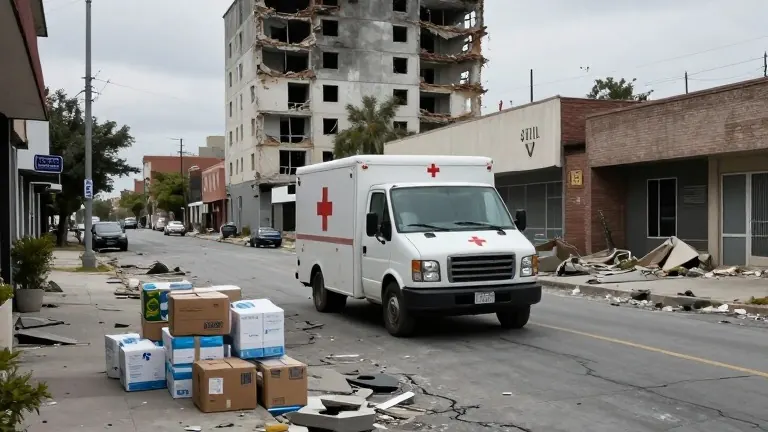
Residents of Oleshky, a Russian-occupied city in southern Ukraine, gained 30 hours of relative quiet on Wednesday. The localized ceasefire, which began Tuesday, is scheduled to last through Sunday. This window allows humanitarian workers to deliver food, medicine, and water to the approximately 2,000 civilians remaining in the city. Evacuation corridors will open only after initial supplies are distributed.
Both sides claim the truce has held without violation. Yana Lantratova, the Russian ombudsperson, and Dmytro Lubinets, Ukraine's human rights ombudsperson, confirmed the pause in fighting on Wednesday. If the agreement lasts the full six days, it will mark the first sustained truce since Russia launched its invasion more than four and a half years ago. Previous attempts to halt combat in this sector have typically collapsed due to deep mutual mistrust.
The U.S. first lady, Melania Trump, brokered the humanitarian mission. The White House stated she secured the agreement, a move that drew praise from officials in both Kyiv and Moscow. Both governments are eager to demonstrate cooperation to President Donald Trump as he pushes for a broader peace settlement. Pope Leo XIV also spoke with Volodymyr Zelenskyy and Vladimir Putin this month, urging them to allow aid into Oleshky and facilitate civilian evacuations.
Despite the local truce, fighting continues across the front. A Russian jet-powered drone struck Kharkiv overnight, wounding five people, including a four-year-old child. The attack ignited fires in an apartment building, a private home, and an industrial facility. In Russia, the Defense Ministry reported that air defenses downed 531 Ukrainian drones from late Tuesday through early Wednesday. Eight people were injured in the strikes, which targeted apartment buildings and industrial infrastructure in three regions.
Technical talks between Ukrainian, Russian, and U.S. delegations are expected in Abu Dhabi in November. However, Washington has not set a specific date because it is monitoring developments in the Middle East. Ukrainian Foreign Minister Andrii Sybiha stated in Helsinki on Wednesday that Kyiv will never accept a formula that costs the country its sovereignty or territorial integrity.
Zelenskyy noted that European leaders have quietly resumed contacts with Moscow. Finnish President Alexander Stubb and Norwegian Prime Minister Jonas Gahr Støre spoke with Putin by phone on Tuesday. They told the Ukrainian president that Russia is serious about discussing de-escalation steps, which could include pausing attacks on energy infrastructure and commercial sea traffic. This contact follows Putin’s summit with Trump in Alaska last year.
Ukraine faces a shortage of air defense capabilities. Zelenskyy said the country is receiving an average of 12 Patriot interceptor missiles per month. This is a sharp decline from previous delivery rates. The Ukrainian president cited the Iran war as a reason for depleted U.S. stockpiles. He highlighted the disparity between the 150 missiles Ukraine might receive annually and the 150 ballistic missiles Russia fires each month.
Source: WDIV ClickOnDetroit