Rail Signaling Failure: Madrid-Seville Crash Kills 68
A computer glitch halted the automated safety system, prompting a Madrid control center to clear trains for movement while a stop signal remained active on the tracks.
By John Price ·
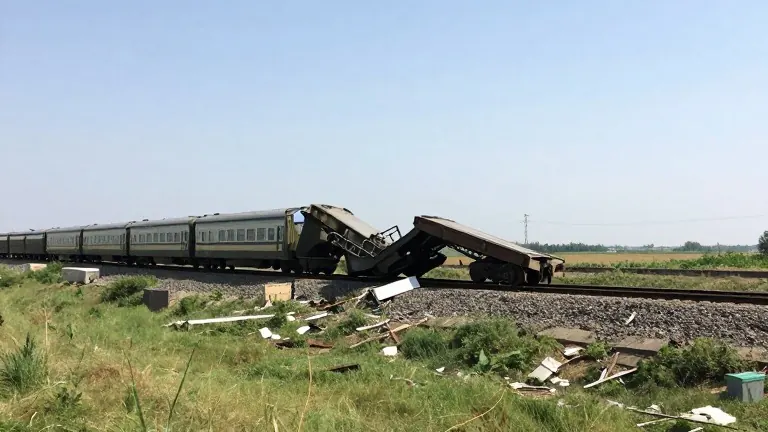
At least 68 people died in central Spain on Wednesday when a moving high-speed train struck the rear of a stationary train, killing a record number of passengers in a single rail accident in the country.
The collision occurred on the line connecting Madrid and Seville. Transport minister Óscar Puente explained that the LZB signaling system, which automatically stops trains if the track ahead is occupied, failed due to a computer malfunction at approximately 8:30 a.m. local time. This outage forced the suspension of six trains along a 63-kilometer stretch of rail.
With the automated system offline, the responsibility for monitoring traffic shifted to a 24-hour command center in Madrid. Puente stated that operators at this center instructed at least two trains to resume normal travel despite a stop signal still being in place on the line. The minister described the decision to resume traffic under these conditions as "inexplicable" and "clearly.. a wrong decision."
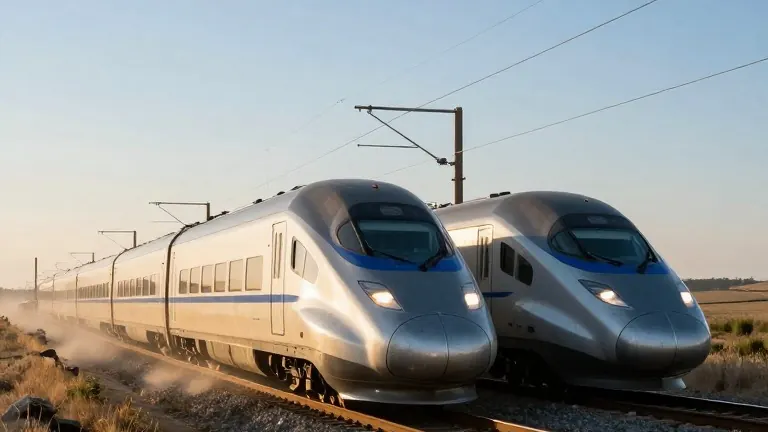
The specific crash involved a private Iryo train sitting stationary on the track and a state-owned Renfe train that was told to move forward. The Renfe train traveled roughly 25 kilometers before impacting the Iryo train about 17 minutes after receiving the instruction. Puente noted that the speed of the Renfe train at the moment of impact is not yet known, although the track section permits speeds up to 200 kilometers per hour.
The incident marks the second major high-speed rail disaster in Spain this year. In January, a collision between the same two operators, Renfe and Iryo, in Adamuz killed 46 people. Prime Minister Pedro Sánchez declared three days of national mourning and called it "unacceptable" for Spain to suffer two such accidents in a single year. He stated from the scene in Castilla-La Mancha that all of Spain is in mourning.
Regional leader Emiliano García-Page said the death toll could rise because rescue teams have not yet reached the bottom of the derailed carriages. An additional 73 people were hospitalized, including 15 in serious condition. Footage from regional channel CMM TV showed twisted metal and broken panels scattered across an embankment beneath the elevated track.
Miguel, a passenger in the rear car of one of the trains, told Cope radio that he heard a "massive roar" and an "enormous thud" lasting 10 seconds. He observed a wrecked train through the right-hand window. The mayor of Urda, Manuel Galán, said emergency services asked him to prepare a local sports hall to accommodate the injured.
Puente indicated that human error in the control center likely caused the crash, though he did not assign blame to specific individuals. He noted that an engineer on another train corrected a similar erroneous instruction, demanding an "on-sight operation" which involves advancing at reduced speed to ensure the track is clear. The operator then approved this reduced-speed protocol.
Sánchez said the causes are under investigation and that any failures in the security system or negligence would be addressed with "utmost severity." He added that the causes of the January and Wednesday accidents appear completely unrelated, though that determination is not his to make. Spain's main political parties suspended their campaign activities for Wednesday as they prepare for next month's general election.
The opposition People's Party leader, Alberto Núñez Feijóo, posted on X that his priority is attending to victims and supporting their families. He offered full support to the emergency teams working on the ground. Spain’s football federation postponed all 24 Copa del Rey games scheduled for that day.
Source: The Irish Times