Scientists Recreate 1,600-Year-Old Glass Recipe Using Gold and Silver
University of Sheffield researchers reproduced the optical effects of the Lycurgus Cup by replicating Roman methods with dichroic glass.
By Julian Khan ·
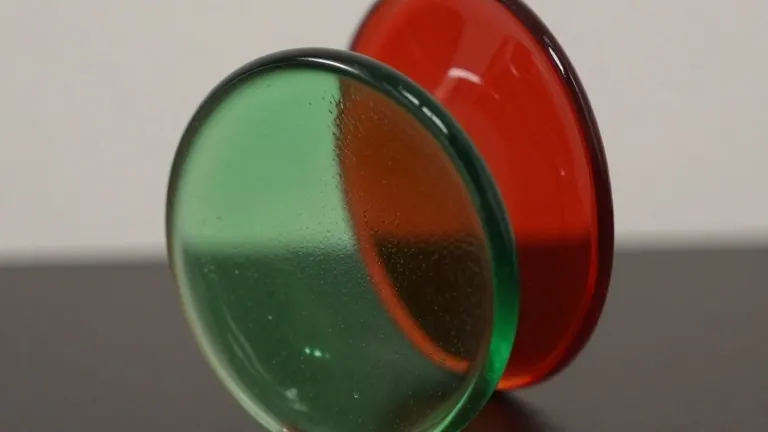
A 1,600-year-old Roman cup changes color depending on how it is lit, and scientists in the United Kingdom have now recreated that exact effect using a modern sculpture.
The original artifact, known as the Lycurgus Cup, dates to approximately 400 CE. It is one of only 40 glass cage cups that have survived from antiquity. Viewers see a green hue when light hits the cup from the front. The color shifts to a deep red when the light source is placed behind the glass.
University of Sheffield researchers recently produced a contemporary sculpture that mimics these optical properties. They succeeded by re-creating the specific chemical recipe used by Roman artisans.
The color shifting phenomenon remained a scientific mystery until 2007. A team of researchers identified nanoparticles within the glass as the cause. These particles formed when Roman glassmakers added finely ground gold and silver to the mixture.
The presence of these nanoparticles alters how electrons vibrate in response to light. This interaction causes the perceived color to shift based on the observer's vantage point. The process is similar to the creation of stained glass, where salts added during the melting of silicon cause gold atoms to aggregate.
This mechanism parallels other natural and historical optical effects. The shifting colors in 19th-century daguerreotypes result from the scattering properties of nanoparticles. Nature uses similar lattice structures in photonic crystals to create the iridescent colors seen on butterfly wings and in opals.
A key distinction exists between the Lycurgus Cup and daguerreotypes. In the ancient cup, nanoparticles are embedded directly within the glass matrix. In daguerreotypes, the particles sit on top of a substrate, which adds reflection. This surface placement means the scattering in daguerreotypes depends heavily on the underlying material.
Source: Ars Technica