Federal Agency Pushes For Standard Blue-Green Lighting On Driverless Vehicles
Regulators are proposing a unified visual standard to help road users identify active autonomous systems.
By Claire Herrera ·
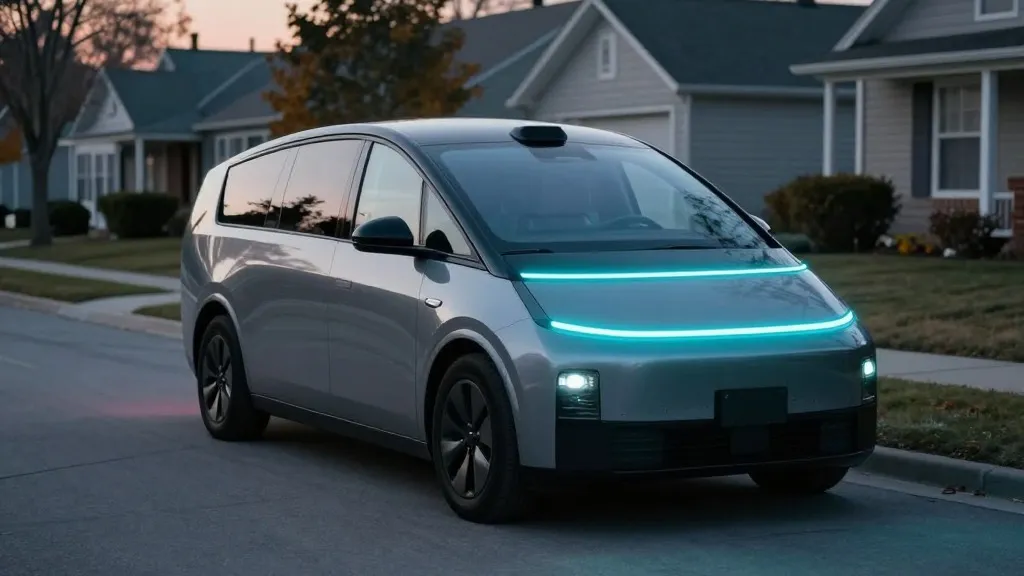
The National Highway Traffic Safety Administration has released a formal proposal to standardize the visual identification of autonomous vehicles across the United States. The agency is recommending that driverless cars utilize specific cyan-colored marker lamps to indicate that an automated system, rather than a human, is in control. This move aims to resolve a long-standing debate among engineers and policymakers regarding the most effective way to communicate vehicle status to pedestrians, police, and other drivers.
The proposal involves rewriting parts of Federal Motor Vehicle Safety Standard 108. While the regulation has historically focused on human-operated cars, the new text explicitly addresses the unique needs of automated driving systems. The goal is to create a consistent national standard that operators such as Waymo, Nuro, and Zoox, along with manufacturers like GM and Mercedes-Benz, can adopt. This standardization is intended to prevent a fragmented landscape where different companies use conflicting signals to represent the same operational state.
Cyan was selected for the proposed marker lights because it occupies a visual gap in current automotive lighting conventions. Red, amber, white, and flashing blue or red lights are already firmly established for brake lights, turn signals, headlights, and emergency vehicles. By using a distinct blue-green hue, regulators believe they can ensure that the signal is immediately recognizable without causing confusion or overlap with existing traffic cues.
There is existing precedent for this type of visual identification. Mercedes-Benz previously received state-level approval to use turquoise lights on its Level 3 Drive Pilot models. Although the automaker later abandoned that specific approach in favor of a Level 2++ system, the experience demonstrated the potential for color-coded indicators. The federal proposal seeks to codify this concept at a national level, providing a clear framework for future vehicle designs.
Under the current draft, the installation of cyan marker lights would remain optional for manufacturers. However, the rule would establish strict federal standards for the color, brightness, and physical location of these lamps. This ensures that if a company chooses to implement the feature, it does so with a consistent and legally compliant setup, avoiding the potential for a confusing array of different colors and signal patterns on the road.
In addition to adding new lighting requirements, the proposal seeks to remove several existing rules that may not apply to vehicles without human drivers. Current regulations mandate the presence of physical hazard switches, manual beam shifters, and turn levers. NHTSA proposes eliminating these requirements, as they are designed for manual operation. The agency is also updating the 12.8-volt testing standard to accommodate modern LED architectures, reducing administrative hurdles for manufacturers.
The agency is also considering revisions to the positioning of high-beam and low-beam lights. Existing rules dictate specific vertical alignments for these components. The new proposal would allow for more flexibility in design, recognizing that the interior and exterior layout of a driverless vehicle may differ significantly from traditional cars. These changes are part of a broader effort by the Department of Transportation to streamline the deployment of autonomous technology.
This regulatory update aligns with the federal government's push to make it easier for automakers to build vehicles that lack traditional controls like steering wheels and pedals. By updating the safety standards, the agency hopes to remove barriers that currently prevent certain driverless designs from meeting federal certification. The changes reflect a shift toward recognizing that the fundamental architecture of an autonomous vehicle is different from that of a car driven by a person.
Regulators continue to enforce current rules while these updates are under review. Last month, NHTSA initiated an audit query into the Tesla Cybercab. The agency is examining the technical data and processes Tesla used to certify the vehicle. The inquiry focuses on the absence of specific design features, including sideview mirrors, pedals, and a steering wheel, which are currently required under the existing Federal Motor Vehicle Safety Standards. This action underscores the ongoing tension between established regulations and emerging autonomous technologies.
The proposal is currently open for public comment before it becomes final. Once finalized, the rules would provide a clear path for manufacturers to introduce driverless vehicles on public roads. The introduction of a standard cyan light is expected to simplify interactions between autonomous vehicles and other road users, potentially improving safety and public confidence in the technology. The timing of the final rule remains subject to the standard regulatory review process.
Source: The Verge · original report published