Tesla's new robot factory aims for one million units a year
Tesla is ramping up mass production of its Optimus robot in Fremont, with plans to train them through a dedicated academy and deliver units to businesses by next year.
By Claire Herrera ·
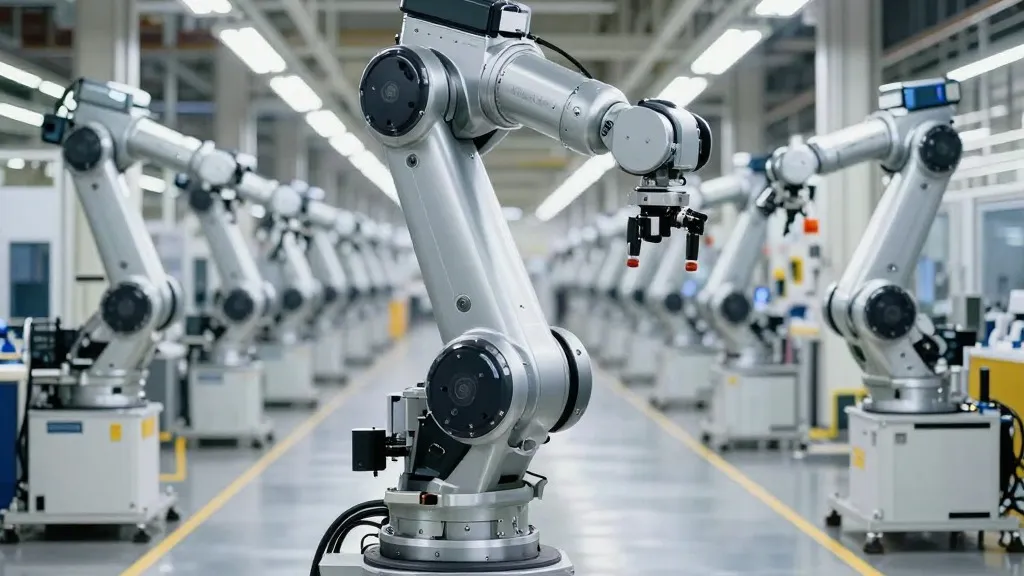
One million units per year is the annual production target Tesla has set for its new humanoid robot, Optimus. This ambitious figure represents a significant leap from the company's current output and signals a major shift in how the automaker approaches robotics. The company recently confirmed that the robots now coming off its manufacturing line in Fremont, California, are the first to meet the quality standards required for a real commercial product. In its third quarter shareholder letter, Tesla stated that the current manufacturing process has been proven suitable for a commercial item, marking a transition from prototype to production.
The move to mass production began with a rapid repurposing of existing factory space. Until this spring, the area in the Fremont facility was used to build the Model S and Model X sedans. Tesla engineers cleared out the old vehicle assembly line in just 46 days to make room for the new robot production setup. This quick turnaround allowed the company to begin integrating the hardware and software needed for high volume manufacturing. The space is now configured to handle the specific requirements of building Optimus at scale.
On the recent earnings call, CEO Elon Musk provided details on the current status of the production ramp. He noted that most of the equipment necessary for the one million unit capacity is already installed in Fremont. As the line ramps up, output is expected to climb toward roughly 20,000 robots per week. Musk described this growth trajectory as a classic S curve, explaining that the initial phase will be a shallow slope before accelerating. The team is currently refining the robot's artificial intelligence, electromechanical design, and reliability to ensure the units are durable enough for long term service.
A key challenge in developing Optimus has been the lack of a large fleet to generate training data. Unlike Tesla's cars, which send driving data from millions of vehicles back to the central AI team, the robots do not have a similar existing network. To solve this, Tesla has created an Optimus Academy. This initiative involves using between 10,000 and 20,000 robots to practice a wide range of tasks. The data generated by these units is then fed into the next version of the AI model, allowing the robots to teach themselves through continuous iteration. Every unit produced at the Fremont line contributes to this learning process.
Tesla is also upgrading the hardware to support these advanced AI capabilities. The company plans to integrate its AI5 chip into the Optimus robots next year. This upgrade is designed to improve processing power and efficiency. Musk indicated that a new video demonstrating the robot completing tasks driven by AI, rather than preprogrammed motions, should arrive within one or two months. He emphasized that this approach is superior to rival demonstrations that rely on scripted routines, which he argued would not hold up in the unpredictable real world.
The supply chain is also scaling up to meet demand. In September, Tesla certified three partners, Tuopu, Joyson, and Sanhua, for mass production of Optimus components. This certification is a critical step in ensuring that parts are available in the quantities needed for high volume manufacturing. Meanwhile, construction is underway on a much larger factory at Giga Texas. Recent drone footage shows the steel frame of this new plant nearing completion. Musk has pegged the long term target for this facility at 10 million robots per year, far exceeding the initial Fremont capacity.
Looking ahead, Tesla plans to start delivering Optimus to outside companies by the end of next year. These initial deliveries will focus on jobs that are dangerous, repetitive, or require around the clock operation. The company is engineering the robot for volume from the start, with production costs trending toward the expected manufacturing cost of the Cybercab. However, the hands remain the most difficult part of the design to perfect. Much of the current engineering effort is focused on solving this issue, as the dexterity of the hands is crucial for the robot's ability to perform complex tasks in a commercial setting.
Source: Teslarati · original report published