Coldwater River Watershed Council Detects New Zealand Mudsnail in Kent County Stream
The invasive species, which reproduces asexually, has expanded its range to the southern Lower Peninsula, posing new threats to local water systems.
By John Price ·
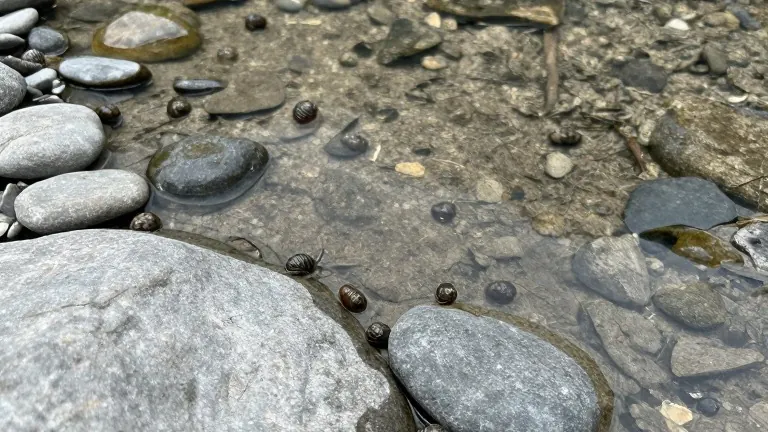
A small but persistent aquatic invader has established a foothold in a new part of the state. The Coldwater River Watershed Council recently identified New Zealand mudsnails in Bear Creek, a tributary of the Thornapple River in Kent County.
This discovery marks the first confirmed presence of the species in the southern Lower Peninsula. The Michigan Invasive Species Program notes that the snails have previously been found in the Great Lakes and other Michigan rivers, but this recent find represents a notable expansion of their geographic range.
Biologists indicate that the snails pose a threat to local ecosystems due to their rapid reproduction rates. One individual can clone itself into 200 new snails per year. In some western states, populations have reached densities of 300,000 snails per square meter. Jen Koop, an invasive species biologist at Northern Illinois University, stated that these tiny creatures can drive out native snail species and clog pipes and drainage systems.
The biological mechanism behind the spread relies on asexual reproduction. Donna Kashian, Director of Environmental Science at Wayne State University, explained that Michigan populations appear to consist entirely of females. A single female is capable of establishing a new population without a mate, making the species particularly difficult to eradicate once it arrives in a water body.
The arrival of the mudsnails adds pressure to Great Lakes fisheries that already face challenges. Kashian noted that invasive mussels like zebra and quagga mussels alter nutrient cycles, creating ideal habitat conditions for the mudsnails. This combination of stressors affects the food web, potentially impacting sport fish such as trout by reducing available zooplankton and outcompeting native organisms for resources.
To prevent further spread, the Michigan Invasive Species Program advises anglers and boaters to clean, drain, and dry all equipment between water bodies. This includes waders, boots, and any gear that contacted water or mud. The New Zealand Mud Snail Collaborative suggests using separate gear for known infested areas and applying heat, cold, or air exposure to kill any hidden snails before transporting equipment.
Source: Michigan Public