
Second Cyclone in Seven Days Strikes Andhra Pradesh, Triggering 30,000 Evacuations
Cyclone Murasu made landfall in Prakasam district at 1am Tuesday, following Cyclone Arnab, with no casualties reported but widespread infrastructure damage confirmed.
By Claire Herrera ·
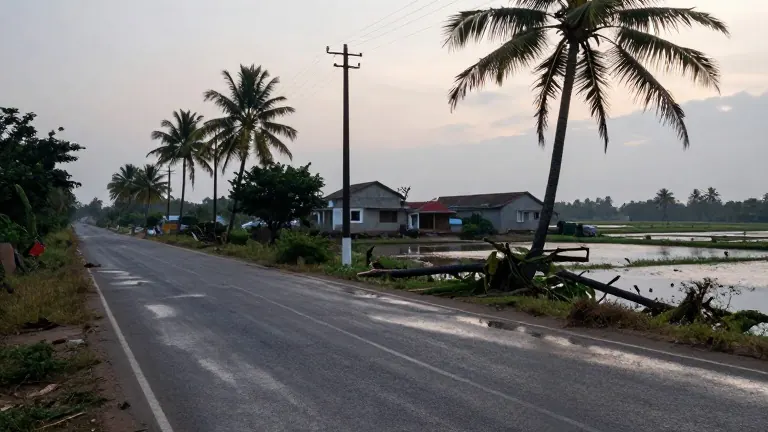
Cyclone Murasu made landfall near Ongole in Prakasam district at approximately 1:00 a.m. on Tuesday, marking the second major storm to hit India’s eastern coast within a single week. The system struck after Cyclone Arnab had recently damaged parts of Andhra Pradesh and Odisha, compounding the strain on local resources and infrastructure.
The India Meteorological Department (IMD) issued warnings for heavy to very heavy rainfall across multiple districts throughout the day. Prakhar Jain, managing director of the Andhra Pradesh State Disaster Management Authority, reported that no deaths or injuries had been confirmed as of the early morning update. He noted that while the human toll remained low, physical damage to trees and electricity poles was already evident.
The Press Trust of India (PTI) documented extensive destruction in Prakasam and Bapatla districts. Thousands of trees were felled, hundreds of power poles were damaged, and numerous fishing boats were wrecked. Standing crops in agricultural fields were also affected, leaving many low-lying areas underwater. Krishnamma, a fisherman from Kothapatnam in Prakasam district, described the event as the most dangerous cyclone witnessed in the local area in 14 years. He stated that approximately 400 families from his village were relocated before the storm’s peak winds arrived.
State authorities began evacuating residents on Monday with the intention of moving roughly 30,000 people to safety across Andhra Pradesh. Indian Home Minister Amit Shah coordinated with Chief Minister N Chandrababu Naidu regarding the response effort. In a post on X, Shah stated that the Central Government would provide all necessary assistance and support. He confirmed that national and state disaster response teams were already deployed on the ground to manage the aftermath.
Murasu formed over the Bay of Bengal, a region known for generating severe storms along the Indian coastline. The IMD forecast that Andhra Pradesh and the southern state of Tamil Nadu would face the heaviest impacts. Heavy rain associated with the storm is also expected to reach Puducherry and Odisha, extending the area of potential disruption.
The sequence of storms places immediate pressure on local emergency services and state budgets, which must now address the compounded damage from two consecutive systems. The timing of the evacuations and the deployment of central teams aim to mitigate further losses as rainfall continues to subside.
Source: Al Jazeera