Iraq PM Orders Investigation Into Maysan Leader Over Border Dispute
Prime Minister Ali al-Zaidi ordered a probe after the head of Maysan's provincial council threatened to block roads if the Sheeb crossing with Iran remains closed.
By Claire Herrera ·
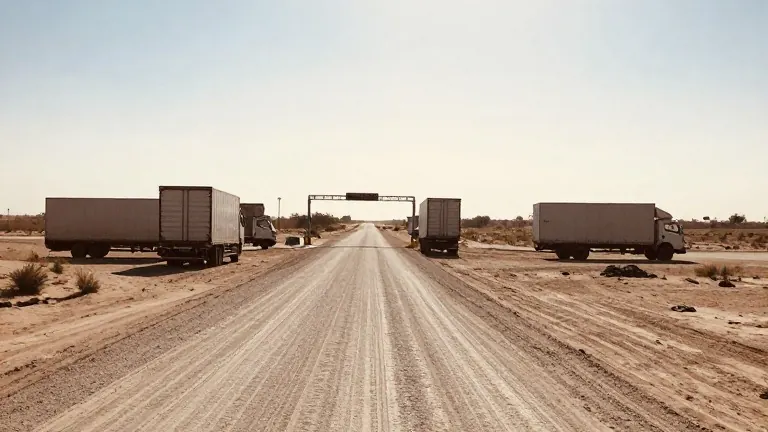
Iraqi Prime Minister Ali al-Zaidi ordered an investigation on Monday into Mustafa Daeer Mohammedawi, the chairman of the Maysan provincial council. The probe follows Mohammedawi's warning that the southeastern province would block connecting roads if the Sheeb border crossing with Iran is not reopened by Thursday.
Baghdad closed the crossing last Wednesday, citing a need to upgrade technical and logistical infrastructure. Government spokesperson Haidar al-Aboudi stated the site lacked necessary technological preparations. Officials also raised concerns about smuggling, while an Iraqi border official told Reuters the closure allows for security reviews and the installation of detection equipment to stop prohibited materials from entering.
The Sheeb crossing, known as Chazabeh in Iran, serves as a major commercial route. Maysan is a Shiite-majority province where cross-border trade is vital to the local economy. Protesters, including truck drivers, gathered near the site on Sunday, demanding the reopening of the route for trade and regular travel.
Mohammedawi warned that Maysan could be effectively cut off from the rest of the country if the crossing stays shut. "If it is not opened, then the people of Maysan province will be forced to resort to civil disobedience on all roads," he said. The dispute has sparked legal questions; lawmaker Mohammed Jassim al-Khafaji argued that only the provincial council can remove its chairman through a majority vote, challenging Zaidi's authority to investigate an elected official.
The tension coincides with broader friction between Baghdad and Tehran. Iran has conducted approximately 1,600 drone, missile, and militia attacks in Iraq, mostly targeting US facilities and Kurdish opposition groups. Despite these strikes, Iran wants its borders open. Iranian-backed groups, including the Islamic Resistance in Iraq, accuse the government of yielding to Washington regarding border controls. Iraq has also referenced "uncontrolled groups" near the crossing, a term often used to describe militias that recently targeted Saudi Arabia.
Simultaneously, renewed protests linked to the 2019 Tishreen movement took place in Baghdad on October 25. Demonstrators waved flags and called for political and economic reforms, opposing the muhasasa system of sectarian quotas. Rights organizations report that over 600 protesters were killed, 20,000 were injured, and 3,000 were arrested during the original 2019 uprising. Badr leader Hadi al-Amiri recently defended the militias' role in suppressing those protests, calling the movement "sedition" that threatened the political order.
Activist Muntadhar al-Zaidi called for accountability over the killing of protesters and criticized the misuse of public wealth. The National House political party, associated with the Tishreen movement, reiterated demands to end corruption and bring weapons under state control.
Source: The Jerusalem Post