House Fight Hinges on 46 Swing Districts Amid New Maps
Republicans must hold 216 seats to keep control of the House, a margin that turns on a small number of competitive races in states with newly redrawn districts.
By Claire Herrera ·
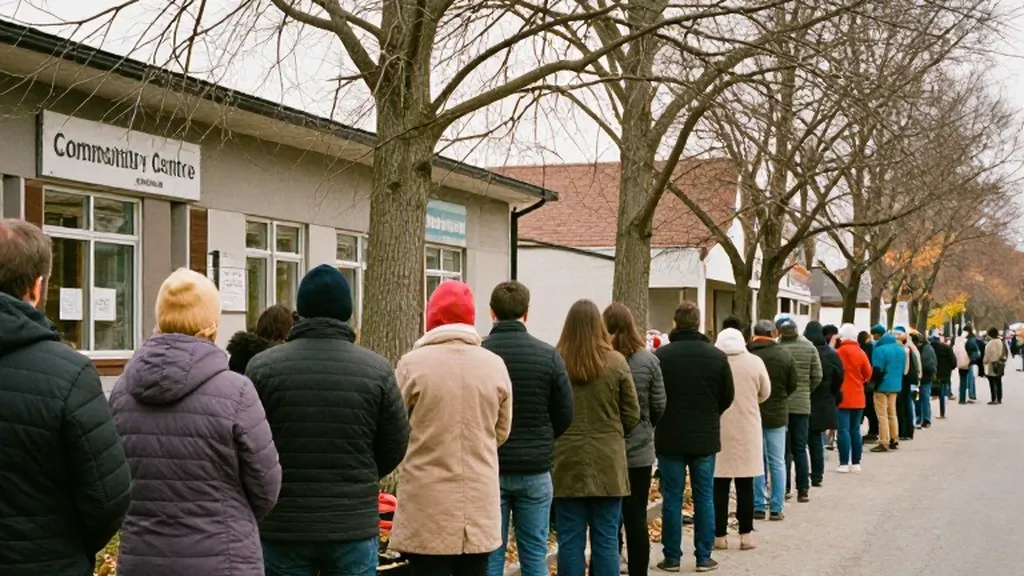
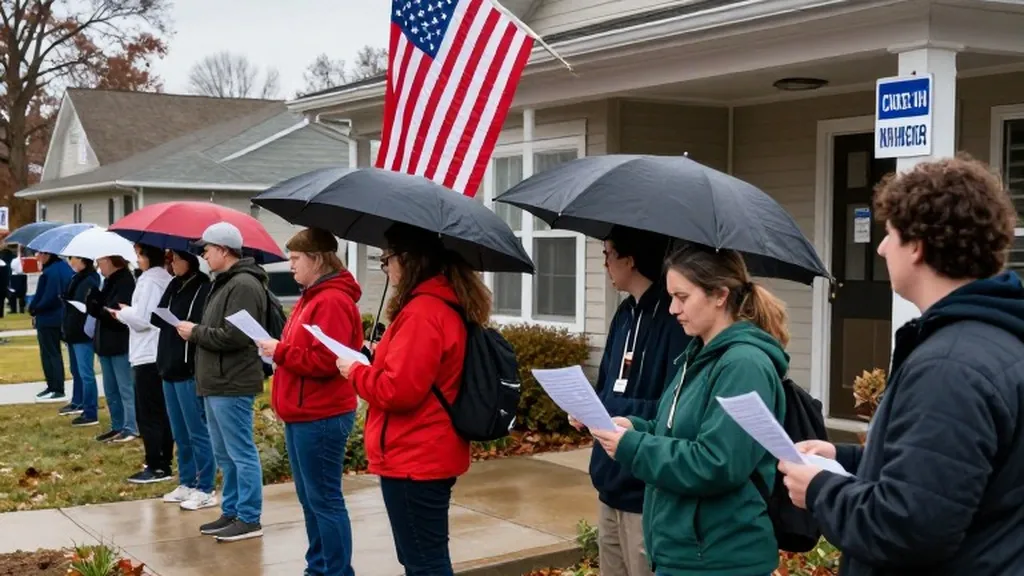
Voters across the nation are casting ballots on Tuesday to determine the balance of power in the U.S. House of Representatives. All 435 seats are up for election in this midterm cycle, which falls halfway through President Donald Trump's second term. The outcome will decide which party controls the chamber for the president's final two years in office. The race is defined by razor thin margins and a high volume of competitive districts that could swing the majority.
Republicans currently hold 218 seats in the House, while Democrats hold 214 seats and one independent holds the final seat. According to Ballotpedia, Democrats need a net gain of three districts to seize the majority. In contrast, Republicans can lose no more than two seats to maintain control. This narrow three seat margin means that the election is effectively decided by a small cluster of battleground districts rather than the entire map.
Ballotpedia has identified 46 battleground districts that are likely to be closely contested. Of these, 25 are currently held by Democrats and 21 are held by Republicans. The political landscape in these districts has shifted since the 2024 presidential election. Twenty one Democratic held districts voted for Donald Trump in 2024, suggesting they may be vulnerable to Republican challengers. Conversely, nine Republican held districts voted for Kamala Harris, indicating potential openings for Democratic candidates.
The composition of the field has changed significantly as 60 incumbents have chosen not to run for re-election. This group includes 37 Republicans and 23 Democrats. Their departure leaves open seats that are often more competitive than districts with entrenched incumbents. These vacancies contribute to the volatility in the House race, as candidates without the benefit of name recognition must compete for votes in a crowded field.
Seven states are using new congressional maps for this election following mid decade redistricting. The states affected are California, Florida, Missouri, North Carolina, Tennessee, and Texas, with Ohio also adopting a new map. These changes have altered the demographics and partisan leanings of various districts. Republicans initially hoped that redistricting would help them beat the typical midterm pattern of losing seats, but new districts in places like Florida may not vote as originally predicted.
The mood among voters is shaped by economic concerns and dissatisfaction with the current administration. The Associated Press describes the election as a referendum on Trump's second term, noting that voters are struggling with high prices and are angry over an unpopular war with Iran. An AP NORC poll shows that 35 percent of U.S. adults approve of Trump's job performance, while only 25 percent approve of his handling of the economy. About seven in 10 respondents say the country is heading in the wrong direction, with most blaming the president for rising costs.
Turnout is a critical factor in this election, as Republicans braced for the possibility of losing the House while fighting to hold the Senate. Republican National Committee Chairman Joe Gruters stated that everything depends on turnout and that turning out their voters is the key to victory. Democratic Congressional Campaign Committee Chair Rep. Suzan DelBene countered that the American people are angry and want change. More than 57 million people had already voted as of Monday, surpassing early vote totals from four years ago in many closely watched states.
Money played a significant role in shaping the campaign, with 2026 likely to be the most expensive election in history. Republican committees outraised and outspent Democratic committees, aided by Trump affiliated groups and support from Elon Musk. However, at the candidate level, Democrats outraised their opponents. An analysis of AdImpact data by the AP shows that 88.1 percent of Republican general election television ad spending went to states and districts that Trump won in 2024. This includes more than $850 million spent in districts where he won by 10 points or more.
The race for the House is distinct from the Senate, where Democrats need a net gain of four seats to take control. The House fight remains the primary focus for parties seeking to check the president's power. If Democrats win even one chamber, investigations and possible impeachment proceedings become likely. House Democratic Leader Hakeem Jeffries, who would be the first Black speaker if his party takes control, has outlined a 100 day agenda focused on the cost of living and oversight.
Voters are heading to polling places or mailing ballots with the knowledge that the outcome of the House could dictate the legislative agenda for the next two years. The combination of new maps, high incumbent retirement, and a tight partisan balance creates a scenario where a few districts will determine the fate of the chamber. The results of these 46 battleground races will set the tone for the final stretch of the Trump administration.
The election also has implications for the 2028 cycle, as a strong Democratic night could boost potential candidates like Gavin Newsom, JB Pritzker, and Pete Buttigieg. Conversely, a Republican hold on the House would complicate the path for Vice President JD Vance. As polls close in states across the country, the focus remains on the specific margins in swing districts that will decide who controls the House for the next two years.