Senate Stakes: 35 Seats, 13 Battlegrounds, and the Math for Control
With polls open across the nation, the race for the upper chamber hinges on 13 specific contests and the delicate arithmetic of the current 53 to 47 split.
By Julian Khan ·
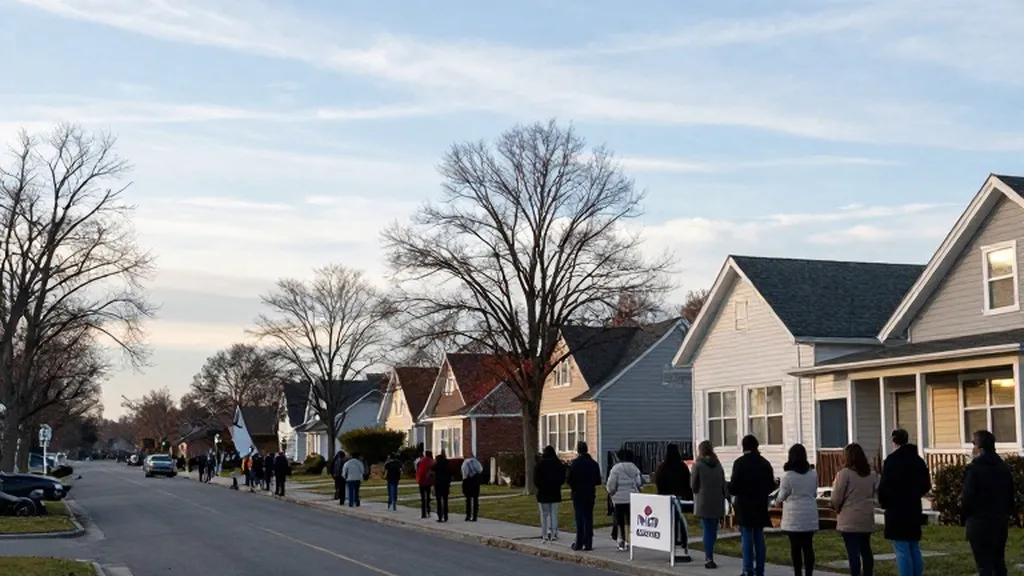
On this Election Day, voters are deciding the fate of thirty-five United States Senate seats, a number that determines which party holds the gavel in the chamber for the next two years. The current balance of power is a razor-thin 53 seats for Republicans and 45 for Democrats, with two independents who caucus with the Democratic side. This composition means the math is unforgiving for both parties as they head into the final stretch of the campaign. The Associated Press notes that the election serves as a referendum on the second term of President Donald Trump, with many voters citing high prices and the ongoing conflict with Iran as primary concerns. As polls open, the focus shifts from the broader national mood to the specific district lines and state maps that will define the outcome.
The Republican Party currently holds the majority and can afford to lose only two seats before ceding control to the Democrats. In contrast, the Democrats need a net gain of four seats to achieve a simple majority. This asymmetry makes the 2026 midterms particularly high stakes. Eleven sitting senators are not seeking reelection, with seven of them being Republicans and four Democrats. These retirements create open seats that often shift the dynamics of a race, as challengers must build name recognition from scratch rather than defending an established record. The winners of these contests will begin their six-year terms on January 3, 2027, immediately impacting the legislative agenda for the remainder of the Trump administration.
Ballotpedia has identified thirteen Senate races as battlegrounds, where the outcome is considered too close to call with certainty. These races span a diverse range of states, from deep blue to deep red, reflecting the complex nature of modern congressional politics. In Alaska, Republican Senator Dan Sullivan is defending his seat in a state that voted for Trump by a margin of 13.1 points in 2024. However, the race is considered competitive, with ratings ranging from toss-up to lean Democratic. The Trump administration has even filed a lawsuit related to the certification of the result in that state, adding an administrative layer to the contest. Voters in Alaska will weigh the incumbent’s record against the shifting political tides of the state.
In the South, Georgia presents a significant challenge for the Democrats, as they attempt to flip a seat in a state that Trump won by 2.2 points. Senator Jon Ossoff is running against Republican Representative Mike Collins. The race is rated as lean to likely Democratic, suggesting that the national mood is influencing local voting patterns. In North Carolina, the retirement of Senator Thom Tillis has opened a path for challengers, with former Governor Roy Cooper facing former RNC chair Michael Whatley. The state voted for Trump by 3.3 points in 2024, making this a pivotal contest. The AP highlights that economic strain and tariffs have made several of these states more competitive than they were in previous cycles.
The Midwest offers another critical front in the fight for Senate control. In Michigan, the open seat left by retiring Senator Gary Peters is seen as a toss-up to lean Democratic. Republican former Representative Mike Rogers is competing against Democrat Abdul El-Sayed. On Sunday, El-Sayed’s former primary opponent, Haley Stevens, endorsed Rogers, a move that signals a consolidation of Republican support in a state that Trump won by a narrow 1.4 points. In Iowa, the open seat following the retirement of Senator Joni Ernst is rated as toss-up or tilt Republican. The state voted for Trump by 13.2 points, yet the race remains in play due to the national environment. Kansas, traditionally a reliable Republican state, has become central to the fight, with Senator Roger Marshall facing a competitive challenge despite the state’s 16.2 point margin for Trump in 2024.
In the Mountain West, Montana and Nebraska present interesting dynamics. Montana is an open seat following the retirement of Senator Steve Daines, and the state voted for Trump by a wide 19.9 point margin. Despite this, the race is considered competitive. In Nebraska, Senator Pete Ricketts is defending his seat in a state that Trump won by 20.3 points. The ratings for these races reflect the difficulty of flipping seats in states with strong partisan leanings. In the Northeast, Maine stands out as a toss-up on all four major ratings systems. Senator Susan Collins, a Republican, is facing Democratic former state Senate President Troy Jackson. The AP notes that economic concerns have made the state particularly volatile, despite its historical leanings.
The special elections in Florida and Ohio also carry significant weight. In Florida, Republican Ashley Moody is running for the remainder of the term vacated by Marco Rubio. The state voted for Trump by 13.1 points, and the race is rated as toss-up to lean Democratic. In Ohio, Republican Senator Jon Husted is facing Democratic former Senator Sherrod Brown. The state voted for Trump by 11.2 points, but the race is considered competitive. These special elections are crucial because they determine the immediate balance of power in the Senate before the full term elections are fully settled. The outcomes in these states will likely influence how the rest of the Senate races are perceived by voters and analysts.
Voters are also considering the broader implications of the election for the presidency and the 2028 cycle. A strong Democratic performance could boost potential presidential candidates such as Gavin Newsom, JB Pritzker, and Pete Buttigieg, while complicating the path for Vice President JD Vance. Republicans are trying to break the historical pattern of the president’s party losing seats in midterms by using redistricting efforts, though new districts in states like Florida may not vote as predicted. The Associated Press reports that more than 57 million people have already voted, surpassing early voting numbers from four years ago in many closely watched states. This high level of participation suggests that the electorate is engaged and that the final margin will depend on turnout in the remaining polling places.